
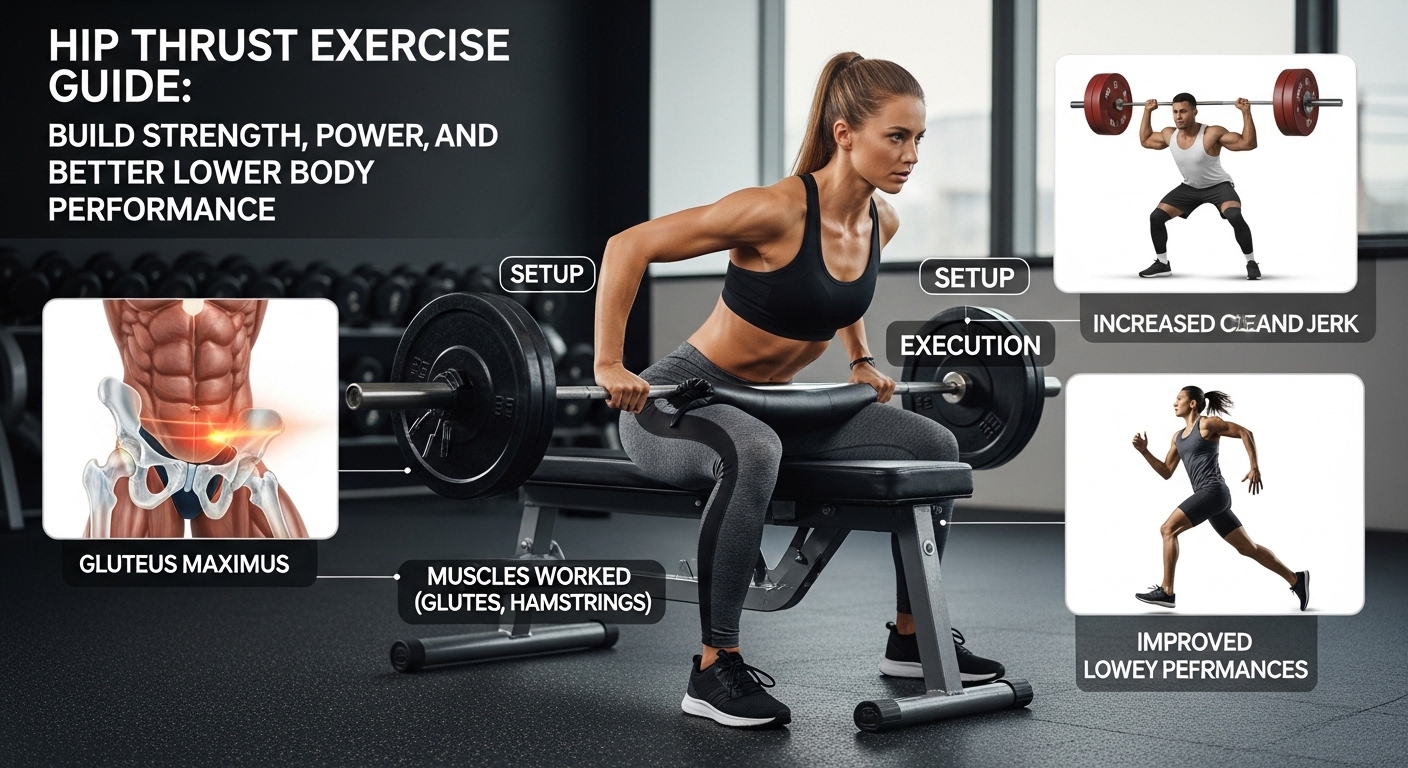

The hip thrust has become one of the most effective movements for building lower body strength and improving athletic performance. Widely used by fitness enthusiasts and athletes, it specifically targets the glutes while also engaging the core and surrounding muscles. Unlike many traditional exercises, the hip thrust allows for controlled movement and focused muscle activation. Whether your goal is strength, stability, or aesthetic improvement, this exercise offers significant benefits. Understanding its proper form and variations can help maximize results while reducing the risk of injury during training.
Understanding the Mechanics of the Hip Thrust
The hip thrust is a strength training exercise designed to activate the glute muscles through a full range of motion. It involves lifting the hips upward while keeping the upper back supported on a bench or platform. This movement emphasizes hip extension, which is essential for many daily and athletic activities. Proper alignment of the spine and controlled movement are critical to achieving the desired results. By focusing on muscle engagement rather than momentum, individuals can effectively target the glutes and improve overall lower body strength and coordination.
Benefits of Including Hip Thrust in Your Routine
Incorporating the hip thrust into a workout routine provides numerous benefits for both beginners and experienced individuals. It helps develop strong and well-defined glute muscles, which are essential for posture, balance, and movement efficiency. This exercise also supports improved athletic performance, particularly in activities that involve running or jumping. Additionally, stronger glutes can reduce strain on the lower back and knees. The hip thrust is versatile and can be adapted to different fitness levels, making it a valuable addition to any strength training program focused on lower body development.
Proper Form and Technique for Best Results
Maintaining proper form during the hip thrust is essential to avoid injury and maximize effectiveness. The shoulders should rest securely on a bench, with feet positioned flat on the ground and knees bent at a comfortable angle. As the hips are lifted, the body should form a straight line from shoulders to knees. Engaging the core and glutes throughout the movement ensures controlled execution. Avoiding excessive arching of the lower back is important for safety. Focusing on slow and steady repetitions helps improve muscle activation and leads to better long-term results.
Common Mistakes to Avoid During Hip Thrusts
Many individuals make errors when performing the hip thrust, which can reduce its effectiveness or lead to discomfort. One common mistake is using too much weight too quickly, which compromises form and increases injury risk. Another issue is improper foot placement, which can shift the focus away from the glutes. Failing to engage the core or rushing through repetitions also limits results. It is important to prioritize technique over intensity, especially when learning the exercise. Correcting these mistakes ensures a safer workout and helps achieve consistent progress over time.
Variations of the Hip Thrust Exercise
The hip thrust can be modified in several ways to suit different fitness levels and goals. Beginners may start with bodyweight variations to develop proper form and strength. As progress is made, additional resistance such as barbells or resistance bands can be introduced. Single-leg hip thrusts provide an added challenge by improving balance and muscle symmetry. Elevated variations increase the range of motion, enhancing muscle activation. These variations keep workouts engaging while allowing individuals to target specific areas and continue progressing in their fitness journey effectively.
Role of Hip Thrust in Athletic Performance
The hip thrust plays a significant role in improving athletic performance by strengthening the muscles responsible for explosive movements. Activities such as sprinting, jumping, and lifting all rely on strong hip extension, which this exercise directly targets. Athletes benefit from increased power, speed, and stability as a result of regular training. Improved glute strength also enhances overall movement efficiency, reducing the risk of injury during high-intensity activities. Incorporating hip thrusts into athletic training programs helps build a solid foundation for performance and long-term physical development.
Equipment and Setup for Effective Training
Setting up correctly is important for performing the hip thrust safely and effectively. A stable bench or platform is required to support the upper back, while a flat surface ensures proper foot placement. Additional equipment such as barbells, weight plates, or resistance bands can be used to increase intensity. Using padding for the hips can improve comfort during weighted variations. Ensuring that all equipment is properly positioned reduces the risk of injury and allows for smooth execution. A well-prepared setup contributes to a more focused and productive workout session.
Frequency and Progression Strategies
To achieve optimal results, the hip thrust should be incorporated into a balanced workout routine with appropriate frequency and progression. Performing the exercise two to three times per week allows sufficient time for muscle recovery and growth. Gradually increasing resistance or repetitions helps build strength over time without overloading the body. Tracking progress and adjusting the workout plan ensures continuous improvement. Combining hip thrusts with other lower body exercises creates a comprehensive training program. Consistency and gradual progression are key factors in achieving long-term fitness goals.
Integrating Hip Thrust into a Balanced Workout Plan
The hip thrust works best when combined with other exercises that target different muscle groups. Including movements such as squats, lunges, and deadlifts helps create a well-rounded lower body routine. This combination ensures balanced muscle development and reduces the risk of imbalances. The hip thrust can be placed at the beginning of a workout to prioritize glute activation or later as a finishing exercise. Adjusting its placement based on fitness goals allows for greater flexibility. Integrating it effectively enhances overall workout performance and supports comprehensive strength development.
Conclusion
The hip thrust is a powerful and versatile exercise that offers significant benefits for strength, performance, and overall fitness. By focusing on proper technique, avoiding common mistakes, and incorporating variations, individuals can maximize its effectiveness. Whether used for athletic training or general fitness, it plays a key role in building strong and functional lower body muscles. Consistent practice and thoughtful integration into a workout routine ensure lasting results, making the hip thrust an essential component of modern strength training programs.