
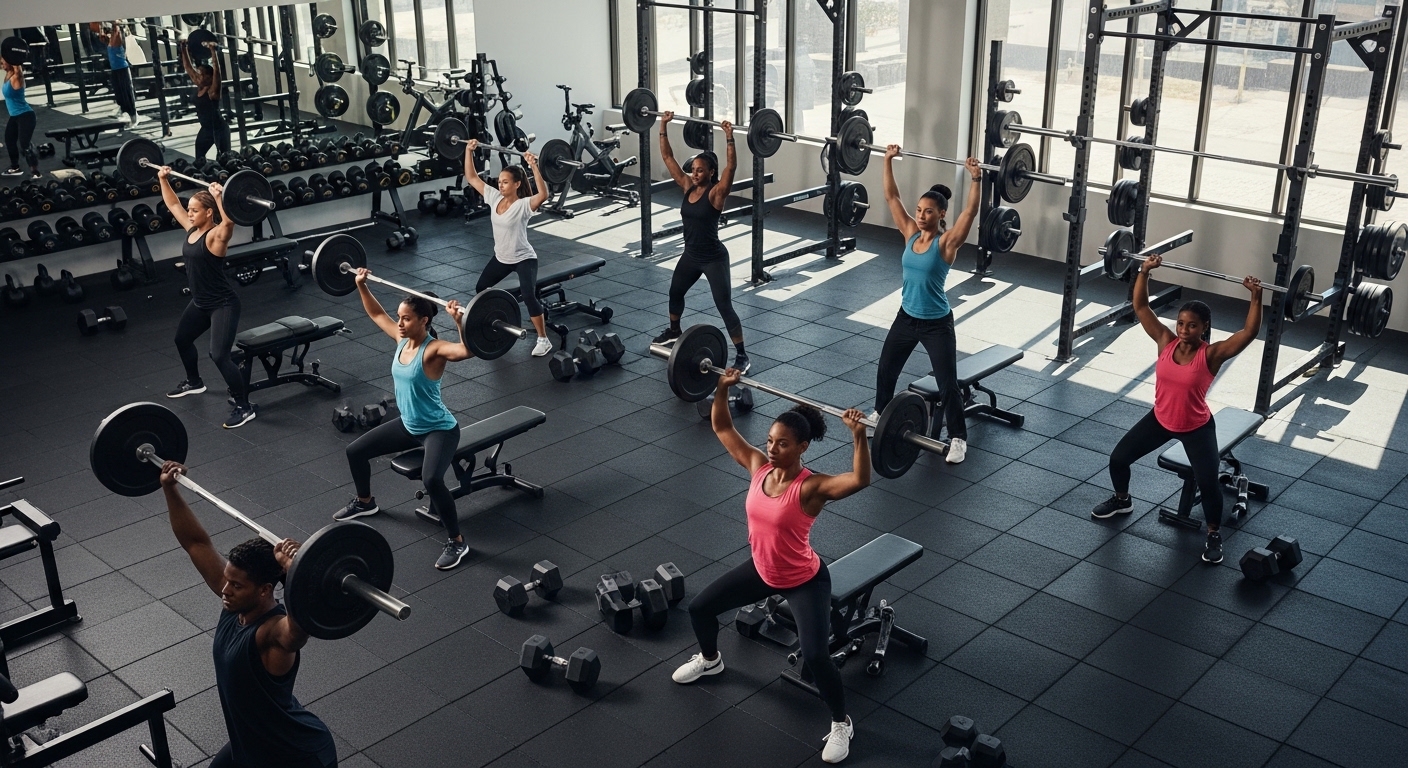

The overhead press is one of the most effective exercises for developing upper body strength and overall stability. It is a compound movement that targets multiple muscle groups, making it a valuable addition to any fitness routine. Whether performed with a barbell, dumbbells, or other equipment, the overhead press challenges coordination, balance, and control. Its simplicity and effectiveness have made it a staple in strength training programs worldwide. As more individuals focus on functional fitness, the overhead press continues to gain recognition as a key exercise for building strength and improving physical performance.
Understanding the Basics of the Overhead Press
The overhead press involves lifting a weight from shoulder level to a fully extended position above the head. This movement requires proper technique to ensure safety and effectiveness. The exercise primarily engages the shoulders, but it also activates the core and stabilizing muscles. Maintaining a stable stance and controlled motion is essential for performing the overhead press correctly. Beginners are often encouraged to start with lighter weights to master the form before progressing. Understanding the fundamentals helps individuals build a strong foundation, allowing them to maximize the benefits of this essential strength training exercise.
Muscles Targeted During the Overhead Press
The overhead press is known for its ability to engage multiple muscle groups simultaneously. The primary muscles involved are the deltoids, which are responsible for shoulder movement and strength. In addition, the triceps play a key role in extending the arms during the lift. The upper chest and core muscles are also activated to provide stability and support. Even the lower body contributes by maintaining balance throughout the movement. This comprehensive muscle engagement makes the overhead press an efficient exercise for building overall upper body strength and improving coordination across different muscle groups.
Benefits of Including the Overhead Press in Your Routine
Incorporating the overhead press into a workout routine offers several benefits beyond muscle growth. It improves functional strength, which is useful for everyday activities such as lifting and reaching. The exercise also enhances joint stability, particularly in the shoulders, reducing the risk of injury when performed correctly. Additionally, the overhead press supports better posture by strengthening the upper back and core. Its compound nature allows individuals to achieve more results in less time, making it a practical choice for those with busy schedules. These benefits make it a valuable component of a balanced fitness program.
Proper Form and Technique for Maximum Results
Maintaining proper form during the overhead press is essential to achieve optimal results and prevent injuries. The movement begins with a stable stance, feet positioned shoulder-width apart. The weight should be held at shoulder level with a firm grip. As the lift begins, the core should remain engaged to support the spine. The weight is then pressed upward in a controlled motion until the arms are fully extended. Lowering the weight slowly ensures continued muscle engagement. Avoiding excessive arching of the back is crucial. Consistent focus on technique helps improve performance and ensures long-term progress.
Common Mistakes to Avoid
While the overhead press is straightforward, several common mistakes can reduce its effectiveness or lead to injury. One frequent error is using too much weight, which can compromise form and increase strain on the shoulders. Another mistake is arching the lower back excessively, which places unnecessary pressure on the spine. Inadequate core engagement can also lead to instability during the lift. Some individuals fail to complete the full range of motion, limiting muscle activation. By being aware of these mistakes and correcting them early, individuals can perform the overhead press safely and maximize its benefits.
Variations of the Overhead Press
The overhead press offers several variations that cater to different fitness levels and goals. The barbell overhead press is commonly used for building maximum strength, while the dumbbell version allows for greater range of motion and balance. Seated overhead press variations provide additional support for beginners or those focusing on controlled movements. Other variations, such as single-arm presses, challenge stability and coordination. Each variation offers unique benefits, allowing individuals to tailor their workouts according to their preferences. Incorporating different forms of the overhead press can help prevent plateaus and maintain consistent progress.
Integrating the Overhead Press into Workout Plans
Including the overhead press in a structured workout plan can significantly enhance overall strength development. It is often placed early in a workout session when energy levels are highest. The exercise can be combined with other compound movements to create a balanced routine. Adjusting the number of repetitions and sets allows individuals to focus on strength, endurance, or muscle growth. Consistency is key to achieving results, and gradual progression ensures continuous improvement. By integrating the overhead press effectively, individuals can build a strong and well-rounded fitness routine that supports long-term goals.
Safety Tips for Beginners and Advanced Lifters
Safety should always be a priority when performing the overhead press. Beginners should start with manageable weights and focus on mastering technique before increasing intensity. Using proper equipment, such as supportive footwear, can improve stability. Advanced lifters should continue to prioritize form, even when lifting heavier loads. Listening to the body and allowing adequate recovery time helps prevent overtraining. Spotters or training partners can provide additional support when needed. By following these safety guidelines, individuals at all fitness levels can perform the overhead press confidently and reduce the risk of injury.
The Role of the Overhead Press in Functional Fitness
The overhead press plays an important role in functional fitness by mimicking real-life movements that involve lifting objects overhead. This makes it highly relevant for improving daily physical activities and overall strength. The exercise enhances coordination, balance, and muscle control, which are essential for functional performance. It also supports athletic training by improving power and endurance. As functional fitness becomes more popular, the overhead press remains a key exercise due to its practical benefits. Its ability to translate gym strength into real-world application makes it a valuable addition to any training program.
Conclusion
The overhead press stands out as a fundamental exercise that delivers strength, stability, and functional benefits. Its ability to engage multiple muscle groups and improve overall performance makes it suitable for individuals at all fitness levels. By focusing on proper technique, avoiding common mistakes, and incorporating variations, individuals can maximize their results. Whether used for building muscle, enhancing athletic performance, or improving daily activities, the overhead press remains a powerful and effective tool. Its continued popularity highlights its importance in modern fitness routines and its value in achieving long-term physical health.